
Atlas Concrete Driveways Austin installs, replaces, and repairs concrete driveways across Austin, TX. We’re a locally owned, veteran-owned company with local crews, and we build every driveway for the city’s expansive clay soil, summer heat, and heavy rain.
If you’re shopping for concrete driveways in Austin, you’re dealing with ground that moves and weather that doesn’t let up. Our crews work in these conditions every week, and we’d be glad to take a look at your driveway and give you a free on-site quote.
We’re the local, veteran-owned team behind Atlas Concrete Driveways Austin, and driveways are the only thing we build. That focus shows up in the base work, the steel, and the drainage, which is where most Austin driveways succeed or fail.
Much of Austin sits on expansive clay. When it’s wet it swells, and when a long summer dries it out it shrinks and pulls away. A slab poured over that kind of soil without the right base gets lifted, dropped, and twisted a little every season, and that’s where the cracking and settlement we’re called out for most often come from.
Heat adds its own stress. Weeks of triple-digit days bake the surface, and then a summer storm drops inches of rain in an hour. Water that sheets off the slab and pools along the edges softens the soil underneath, which is why drainage problems show up so often on the driveways we look at. Our driveway drainage guide explains how slope and grading fix it.
West of MoPac the ground changes. Parts of West Austin sit on shallow soil over limestone, where the challenge is less about swelling clay and more about excavation, grade, and getting water off a sloped lot.

Every Austin driveway we pour starts with the same priorities:
If you’re starting from scratch, our new driveway installation page walks through the full process. For an old slab that’s cracked through, sunk, or heaved, a complete driveway replacement is usually the better spend.
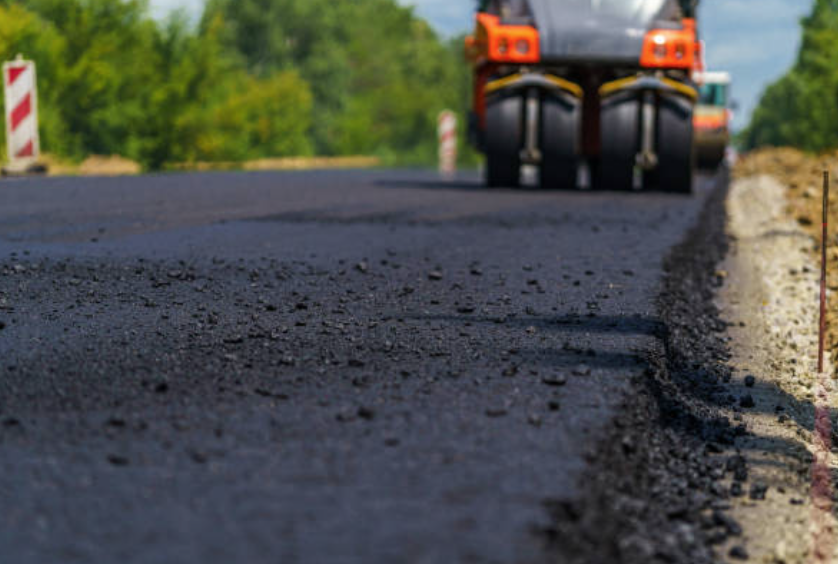
Not every damaged driveway needs to come out. Surface cracks, worn spots, and a section that’s settled can often be fixed for far less than a new pour. For sunken sections we use mudjacking, which lifts the slab back into place by pumping material underneath it. Our Austin driveway repair page covers what we fix and how.
The honest test is what’s happening below the surface. If the base has washed out or the clay has moved the slab in several directions, a repair won’t last, and we’ll tell you that up front. The guide to common driveway problems explains the warning signs.
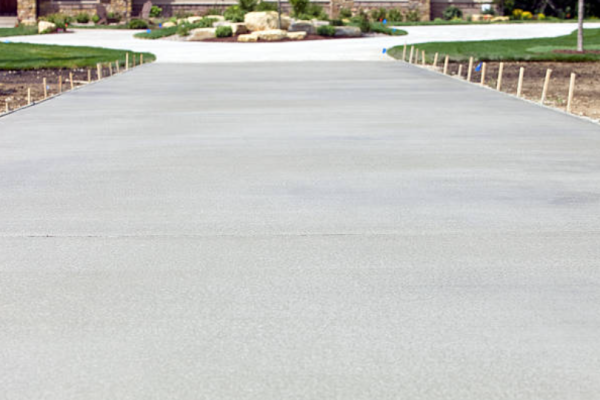
In Austin, the part of your driveway that meets the street sits in the public right-of-way, and work there needs city approval. New approaches, wider curb cuts, and second driveways go through the city’s Right-of-Way Permits process with Transportation and Public Works. Our permit partners prepare and file that paperwork for projects that need it.
A like-for-like replacement that doesn’t touch the approach often skips that step, but not always. We confirm the requirements for your address before we schedule the pour, and our Austin driveway permit guide covers the details.
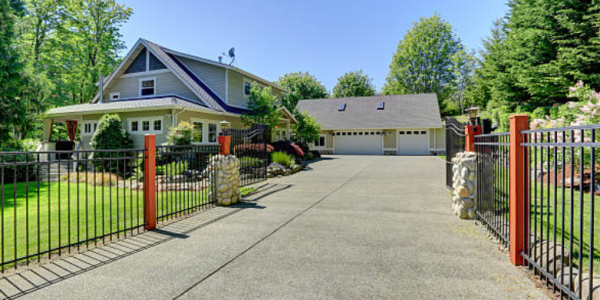
Most installs are scheduled within 7 to 10 business days after you approve the quote. From there, the forecast sets the exact day. We won’t pour ahead of heavy rain, and on the hottest summer days we start early so the concrete isn’t curing under the afternoon sun.
After the pour, plan on staying off the new driveway on foot for a day or two and keeping vehicles off for about a week while it gains strength.
We’re a locally owned, veteran-owned company, and our crews live and work in the Austin area. That isn’t a slogan so much as a practical fact: the people pouring your driveway deal with the same clay, heat, and storms at their own homes. We’re fully insured, we keep our recommendations straightforward, and we’ll tell you when a smaller fix is the right call.
With a solid base, steel reinforcement, and good drainage, a concrete driveway in Austin typically lasts 25 to 30 years or more. The biggest threats here are clay movement and water, so keeping rain flowing away from the edges and resealing every few years does more for its lifespan than anything else you can do.
Mostly because of the soil. Austin's expansive clay swells when it's wet and shrinks when it dries, and a slab without a well-compacted base and steel reinforcement can't ride that movement out. Poor drainage makes it worse by softening the ground under the edges. Control joints help by steering cracks to planned lines, but the base and drainage do the heavy lifting.
Usually, if the work touches the street. The approach and curb cut sit in the public right-of-way, so a new driveway, a wider approach, or a second curb cut needs city approval. A replacement that stays in the same footprint often doesn't. Our permit partners prepare and file the paperwork when it's needed, and we confirm the rules for your address first.
Most installs are scheduled within 7 to 10 business days after you approve the quote. The exact pour date depends on the size of the job, any permit review, and the forecast, since we won't pour ahead of heavy rain. We'll give you a firm date once we've seen the site and you've signed off on the plan.
Often, yes. If the slab itself is sound and one section has settled, mudjacking can lift it back into place by pumping material underneath it. If the base has failed across the driveway or the slab is broken into pieces, a repair won't hold for long, and replacement is the better investment. We'll show you which situation you're in.
Size, thickness, steel reinforcement, how much site prep the soil and grade need, removing an old slab, access for the trucks, and any permit work all move the price. There's no flat rate, which is why we quote on site after seeing the property. Our concrete driveway cost guide walks through each factor in more detail.
Yes. Along with residential driveways, we take on commercial concrete driveway work such as entry drives and parking pads, built with heavier reinforcement for vehicle traffic. Every commercial site is quoted individually after we review access, loads, and timing, so the work can be planned around your business. Send us the site details and we'll walk through what it needs.