
Atlas Concrete Driveways Austin builds, replaces, and repairs concrete driveways in Lakeway, TX. Our veteran-owned local team plans each driveway around Hill Country limestone, sloped grades, and drainage, and confirms Lakeway’s permit requirements, which cover replacements too, before work begins.
Lakeway driveways face a different set of problems than the flatter parts of Central Texas. Slope, rock, and runoff shape every decision. If you’d like a straight answer about yours, book an on-site estimate and we’ll walk the lot with you.
We’re a locally owned, veteran-owned company, and our local crews work across the Austin area, Lakeway included. Learn more about us at concretedrivewaysaustin.com.
Much of Lakeway sits on limestone, often with only a thin layer of soil on top, and many lots slope toward the street or toward Lake Travis. Rock changes the excavation work: we cut to a consistent depth so the base supports the slab evenly instead of leaving high and low spots that crack later. We confirm what’s under the surface during the quote visit, so the excavation plan is part of the price.
Grade changes the drainage. On a sloped driveway, rain doesn’t pool so much as run, and fast-moving water can undercut the edges and wash out the base over time. The drainage problems and settlement we see on hillside driveways nearly always trace back to how water was handled when the slab was built.

Lakeway is stricter than many nearby cities. Its Building and Development Services department lists driveway replacement and flatwork among the alterations that require a permit, so even a like-for-like replacement shouldn’t start without approval. Starting without one can mean a stop-work order, so we treat approval as the first step. You can see the list in the city’s Building Permit Requirements.
Many Lakeway neighborhoods also have their own property owners’ association rules for driveways, which are separate from the city’s permit. Our permit partners prepare and file the city paperwork, and we’ll provide the project details you need for any association review. The Austin-area permit guide explains how approvals work.

On a sloped lot, drainage planning matters as much as the concrete. We set the slab’s slope so water moves off the surface and away from the house, protect the edges where runoff concentrates, and keep the base from becoming a channel for water. Getting this right is what keeps a hillside driveway from settling or cracking at the bottom of the grade.
If your current driveway already shows washed-out edges or a sunken lower section, it’s worth deciding whether it can be saved. Our guide to repairing versus replacing walks through the signs.
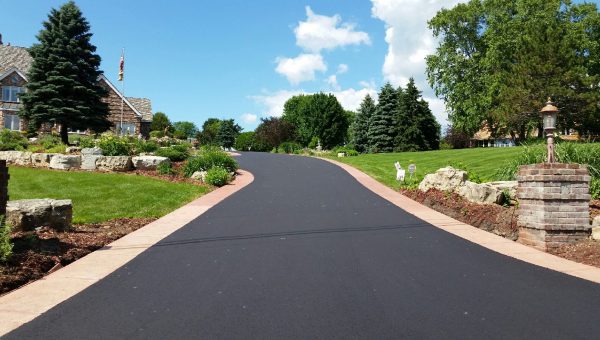
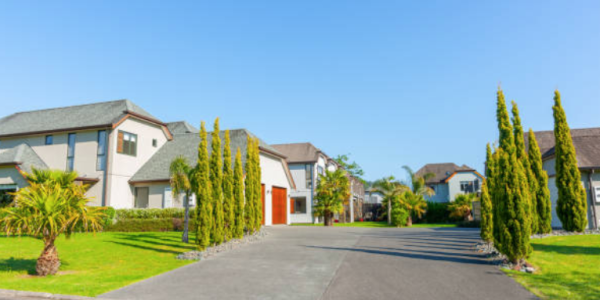
Hillside lots often mean tighter access for equipment and concrete trucks, especially where a driveway climbs from the street or curves around trees and rock. We look at how trucks can reach the pour site during the quote visit, because access affects the schedule, the crew size, and sometimes the layout.
If rock has to be cut back on part of the route, we’ll explain that before you commit, not after we’ve started. Planning these details up front is what keeps a Lakeway project on time. We also take on business sites; see our commercial concrete options for entry drives and parking pads.
Most installs are scheduled within 7 to 10 business days after you approve the quote. In Lakeway, any permit review comes first, so we’ll factor that into the timeline. Weather sets the exact pour day, since we won’t pour ahead of heavy rain. The installation timeline guide explains how long each stage of a typical pour takes.
We’re fully insured, our crews are local, and we keep our recommendations honest. If a repair will hold, we’ll tell you; if the slope or base means the driveway needs a rebuild, we’ll explain exactly why.
Yes. Lakeway's Building and Development Services department lists driveway replacement and flatwork among the alterations that require a permit, so a replacement shouldn't start without approval, even in the same footprint. Our permit partners prepare and file the city paperwork, and we confirm the requirements for your property before we schedule any work.
Mostly because of water. On a slope, runoff moves fast and concentrates at the edges and the bottom of the driveway, where it can undercut the base over time. Limestone with thin soil on top also needs careful excavation so support is even. A well-built base, edge protection, and planned slope prevent most of these failures.
In most cases, yes. Steeper driveways need careful base preparation, a slope that keeps water moving off the surface, and protection at the edges where runoff concentrates. We look at the grade, the rock, and where the water goes before recommending a layout. If something about the site needs extra work, we'll explain it in the quote.
Possibly. Many Lakeway neighborhoods have property owners' associations with their own driveway rules, and those approvals are separate from the city permit. An association can't issue a permit, and a city permit doesn't satisfy an association, so you may need both. We'll provide the project details you need for the association's review.
Most installs are scheduled within 7 to 10 business days after you approve the quote, but in Lakeway any required permit review comes first. Once work starts, a typical driveway takes a few days on site, then about a week before you drive on it. We'll give you a full timeline after seeing your lot and confirming the permit.
We start by setting the slab's slope so water leaves the surface quickly and heads away from the house. Then we protect the edges, where runoff concentrates and can undercut the base, and look at whether the lot needs a trench drain or regrading at the bottom of the grade. Fixing the water path is what keeps a hillside driveway from settling.
It can. If excavation hits solid limestone, cutting down to a consistent depth takes more time and equipment than digging through soil, and that's reflected in the quote. We check what's under the surface during the site visit, so any rock work is priced up front rather than discovered halfway through the project and added to your bill.
It can be, if the base is still sound. Surface cracks and worn spots can be repaired, and a settled section can sometimes be lifted with mudjacking. If water has washed out the base or the slab has broken into several pieces, especially on a slope, a repair won't last and replacement is the better value. We'll show you what we find.