
Atlas Concrete Driveways Austin builds, replaces, and repairs concrete driveways in Round Rock, TX. Our locally owned, veteran-owned team plans each driveway around the soil on your lot, drainage, and Round Rock’s right-of-way permit rules before any concrete is poured.
A driveway in Round Rock has to deal with the same Central Texas heat and storms as anywhere around Austin, but the ground and the paperwork have their own quirks. When you’re ready, request a free quote and we’ll come out to look at the site in person.
Our local, veteran-owned crews pour concrete driveways in Round Rock for homeowners who want the job done once. Here’s what that involves, from the soil to the city’s permit desk. You can learn more about our company on the Atlas homepage.
Round Rock sits close to the line where the Hill Country’s limestone gives way to the Blackland Prairie. In practice that means the soil can change noticeably from one side of town to the other: shallower, rockier ground in some places and deep, expansive clay in others.
Clay is the one that causes most driveway trouble. It swells after rain and shrinks in a dry summer, and a slab without proper support cracks and settles as the ground moves. Rocky ground brings different work, such as excavating to a consistent depth so the base is even. We check what’s actually under your driveway before deciding how much base and steel it needs.

On clay lots, water is the trigger for almost every problem. When rain soaks the soil along a driveway’s edge, that strip swells while the ground under the middle stays drier, and the slab gets stressed unevenly. Over a few seasons that shows up as cracks running in from the edges or a corner that drops.
We set the slope so water leaves the surface quickly, keep downspouts from emptying at the slab, and recommend a trench drain where a lot naturally funnels water toward the driveway. On a new pour, those decisions cost little. On an existing driveway, fixing the water first is what makes a repair worth doing.
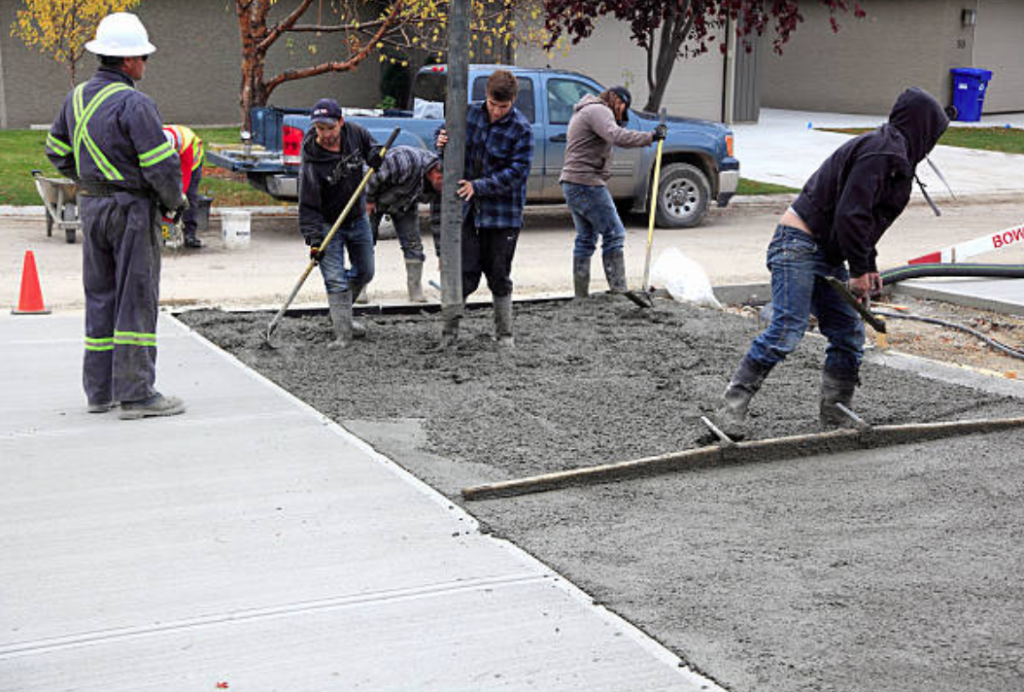
Round Rock’s Transportation Department requires a Street Cut permit for any work that cuts, breaks, or damages the sidewalk or roadway in the right-of-way, which includes most driveway approach work. Contractors working in the right-of-way also have to provide the city with proof of insurance and a surety bond. You can read the requirements on the city’s Transportation Permits page.
One detail surprises many homeowners: the city restores a driveway approach only when its own work affected it, so a cracked approach is usually the owner’s to fix. When a permit applies, our permit partners prepare and file it, and our driveway permit rules guide explains how approvals work across the area.
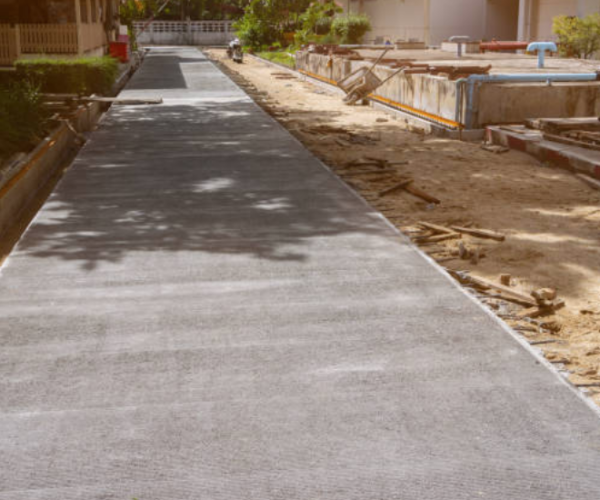
The first month matters. Concrete keeps gaining strength for about 28 days, so walk on it after a day or two, but hold off on cars for roughly a week. Our guide on when to drive on new concrete breaks the timeline down.
After that, upkeep is simple. Keep gutters and downspouts from dumping water at the slab’s edges, rinse off oil and chemical spills, and reseal every few years to slow down water and UV damage. The sealing a concrete driveway guide covers when and how.
Most of our Round Rock work falls into three categories:
We’ll recommend the least invasive option that will actually last. If a repair would only buy you a year or two, we’ll say so and explain why. We also take on business properties; see our commercial driveway capabilities for entry drives and parking pads.
We’re locally owned and veteran-owned, and our local crews work across the Austin area, so Round Rock is home ground for us rather than a long drive. We’re fully insured, we quote in writing, and we keep our recommendations plain: what’s wrong, what will fix it, and what it takes to do it right.
If the work cuts, breaks, or damages the sidewalk or roadway in the right-of-way, Round Rock requires a Street Cut permit from its Transportation Department, and that covers most approach work. Work that stays entirely on your property is treated differently. When a permit applies, our permit partners prepare and file it so the approval is in place before the pour.
Usually the homeowner. Round Rock restores a driveway approach only when its own work affected it or under a few specific conditions, so normal cracking or settling at the street end is the owner's responsibility. If your approach is damaged, we can look at whether it can be repaired or whether that section should be replaced along with the rest.
Round Rock sits near the transition between the Hill Country's limestone and the Blackland Prairie's clay. Some lots have shallow, rocky ground, while others sit on deep, expansive clay that swells and shrinks with moisture. That's why we look at the actual site before deciding how much base preparation and steel reinforcement a driveway needs.
It depends on the cause. Hairline and surface cracks can often be filled or resurfaced, and a settled section can sometimes be lifted with mudjacking. If the base has failed or the slab is broken into several pieces, repairs won't hold, and replacement is the better value. We'll inspect it and walk you through both paths honestly.
Plan on about a week before you drive on it, and longer before heavy vehicles. You can usually walk on new concrete after a day or two, but it keeps gaining strength for around 28 days. Hot weather speeds the surface up, not the strength, so we'll give you specific timing based on your pour and that week's forecast.
The approach is the section between the street and your property, and it usually crosses the sidewalk and sits in the right-of-way. Because that work cuts into public sidewalk or curb, Round Rock requires a Street Cut permit, and contractors need insurance and a surety bond on file. We coordinate the timing so the approach and the driveway are poured as one plan.
Every few years is a good rule for most homes here. Sealing slows water and UV from working into the surface, which helps a driveway hold up through hot summers and heavy storms. Clean the slab and fill any small cracks first. If you're not sure whether yours needs it, we're happy to take a look during a quote visit.