A concrete driveway usually takes about a week from start to finish in Austin, though the slab keeps curing after that. The on-site work, demolition, base prep, forming, pouring, and finishing, runs a few days, with timing shaped by weather, size, and access.
Once you’ve decided on a concrete driveway, the next question is usually how long it will take. In Austin, plan on about a week from the first day on site to a finished, drivable surface, though the concrete keeps hardening well beyond that. The on-site work itself runs for a few days; the rest is curing. Here’s the step-by-step timeline and what can speed it up or slow it down. If you want a schedule for your project, reach the crew.
The Short Answer: About a Week On Site
For a standard residential driveway, the hands-on work, from demolition through the final finish, usually spans a few days, and most projects wrap the on-site portion within about a week. After that, the slab needs time to cure before it carries weight. So while you’ll have a finished-looking driveway in days, the full timeline from start to drivable is closer to a week or more once curing is factored in, which we’ll get into below.
Step by Step: What Happens and When
A concrete driveway goes in through a clear sequence, and each step has to finish before the next begins:
- Site evaluation and quote. We measure, check the soil and drainage, and put the scope and price in writing before anything starts.
- Demolition and haul-away. If there’s an old driveway, we break it out and remove it, which adds time to a replacement.
- Excavation and base prep. We grade the area, compact the subgrade, and lay a gravel base so the slab sits on solid, well-draining ground.
- Forming and reinforcement. We set the forms to shape and slope the driveway, then place steel mesh or rebar for strength.
- Pour and finish. The concrete is poured, leveled, and finished with your chosen texture, usually all in a single day.
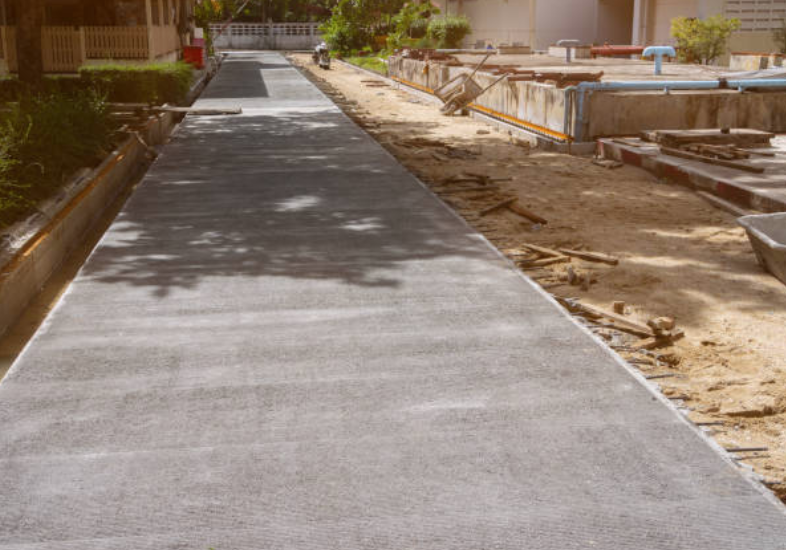
- Curing. The slab is left to harden and gain strength before foot traffic and vehicles, which is the longest part of the timeline.
That whole flow is the heart of a proper the installation process itself, and skipping or rushing any step is where problems tend to start later on.
Before the schedule, settle slab thickness choices; they drive the excavation depth.
Then Comes Curing
The pour is quick; the curing is not. Concrete reaches most of its strength in the first several days, but it’s still hardening for weeks after that. As a rule, you can walk on a new driveway after a day or two and drive on it after about a week. We cover the full schedule on how long before you can drive on a new driveway. Rushing this stage is one of the easiest ways to damage an otherwise perfect slab, so it’s worth the patience.
What Affects the Timeline
A few things move the schedule up or down. The driveway’s size is the obvious one, since a larger or more complex layout takes longer to form and pour. Demolition of an old surface adds a day. Access matters too: if trucks can’t reach the pour, crews pump or wheelbarrow the concrete, which slows things down. And permits, where they’re required, need to be in hand before work begins, so they’re worth sorting out early rather than late.
Weather and Austin’s Climate
Concrete is weather-sensitive, and Austin’s climate cuts both ways. Crews need a dry window to pour and finish, so heavy rain pushes the date. Extreme heat speeds the set, which sounds helpful but can actually weaken the slab if it loses moisture too fast, so we time and cure pours to manage it. This careful handling is part of why concrete performs so well here, which we cover in the benefits of a concrete driveway.
Demolition and Replacements Take Longer
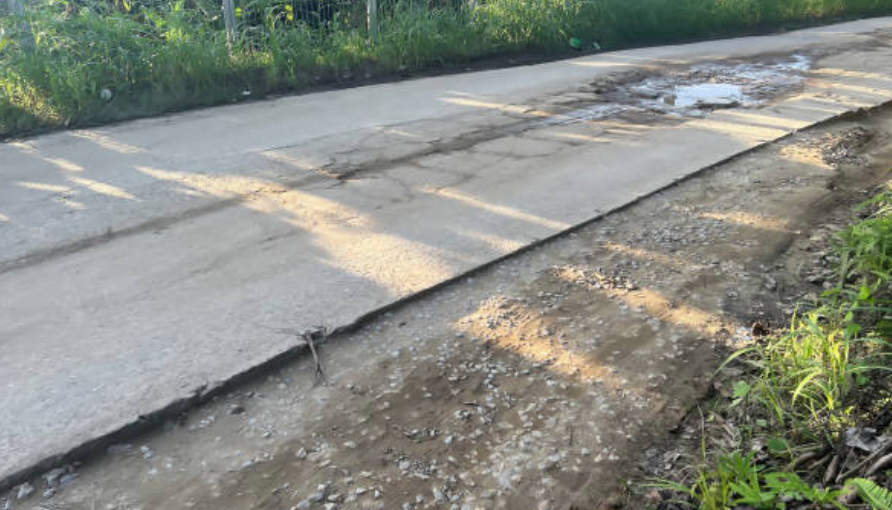
A brand-new pour on a bare lot is the quickest path. A the complete tear-out option adds demolition, haul-away, and often base repair before the new slab goes down, so it runs a bit longer than a fresh install. It’s time well spent, since rebuilding the base correctly is what keeps the new driveway from repeating whatever caused the old one to fail.
Planning Around the Install
A little prep keeps the project smooth. Clear vehicles and anything stored on the driveway before the crew arrives, plan for limited access while the work is underway, and keep kids and pets away from the fresh pour. You’ll want an alternative place to park for the installation and the following curing days. You can see examples of finished work on our recent builds.
Getting Your Timeline
Every driveway is a little different, so the best way to get an accurate schedule is to have us out to see the job. We’ll factor in size, demolition, access, and the weather window, then give you a realistic start-to-finish timeline along with your quote. We cover what shapes the price of concrete driveways in Austin separately.
You can see the full range of what we do on our service options overview, and what we build Austin job sites.
Call (512) 215-3767 to get a start-to-finish timeline for your driveway.
Frequently Asked Questions
In Austin, a concrete driveway usually takes about a week from the first day on site to a drivable surface. The hands-on work, demolition, base prep, forming, and the pour run a few days, and then the slab cures before it carries weight. Size, demolition, access, and weather all shift the schedule, so the surest way to get a firm timeline is an on-site look.
The pour itself is usually a single day. Once the base is prepped and the forms and reinforcement are set, the concrete is placed, leveled, and finished in one session for a standard residential driveway. The days around it, demolition, excavation, base prep, and forming, make up the rest of the on-site time, with curing following after the finish work is done.
No. The slab needs to cure before it carries weight. As a general rule, you can walk on a new driveway after a day or two and drive on it after about a week, with full strength reached over roughly a month. Driving too soon risks cracks and surface marks, so it's worth waiting out the curing window even when the surface looks ready to use.
Yes, a bit. A replacement adds demolition, haul-away, and often base repair before the new slab goes down, so it runs longer than pouring on a bare lot. The extra time is well spent because rebuilding the base correctly prevents the new driveway from repeating whatever caused the old one to fail in the first place.
Weather is the big one: crews need a dry window to pour and finish, so heavy rain pushes the date. Other factors include the size and complexity of the driveway, demolition of an old surface, limited access that requires pumping concrete, and permits that must be in hand before work begins. A good contractor plans around these and gives you a realistic schedule up front.
It can. Extreme heat speeds up how quickly concrete sets, which can seem helpful but can weaken the slab if it loses moisture too quickly, so crews time and cure hot-weather pours carefully. That may mean pouring earlier in the day or taking extra steps to keep the slab moist as it cures. Managing the heat is part of building a driveway that lasts in this climate.
Not for the whole thing, but it helps to be available at the start to confirm the layout and finish, and at the end for a final walkthrough. You'll want to clear the driveway beforehand and plan for limited access during the work and the following curing days, including arranging somewhere else to park. We'll coordinate the details with you when we schedule the job.
You can also start budgeting the project while the quote comes together.